Why Venezuela’s Crude Matters to Washington Now
When historians look back at early 2026, one image will inevitably stand out: oil tankers unloading Venezuelan crude on U.S. docks as part of a deal born not in boardrooms or diplomacy, but in the aftermath of a dramatic military operation in Caracas. That operation — one that saw Venezuelan President Nicolás Maduro captured and flown to the United States — has reshaped the political and economic landscape of the Western Hemisphere.
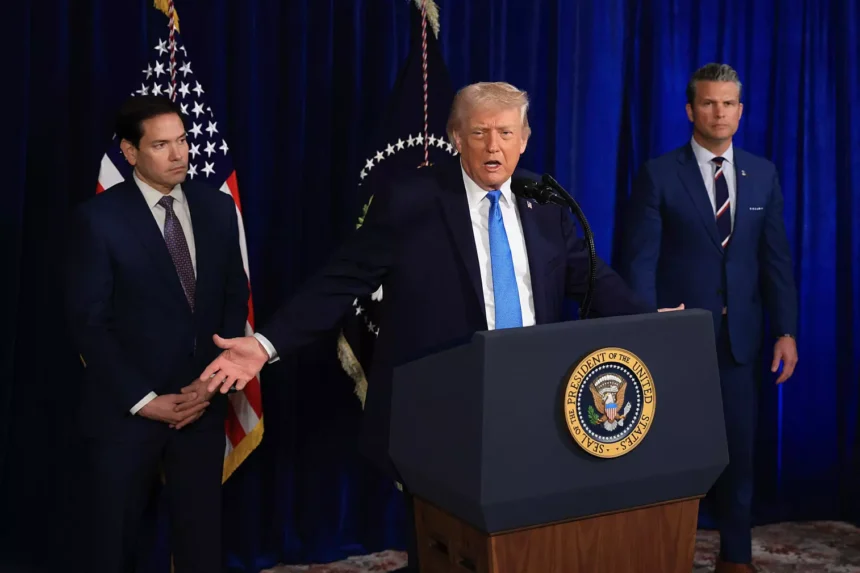
President Donald Trump announced that as much as 30 million to 50 million barrels of sanctioned Venezuelan oil will be transferred to the United States and sold at market price. Crucially, he declared that the proceeds will be managed under his authority with the stated aim of benefiting both American and Venezuelan citizens.
This is more than a commercial transaction. It’s a turning point in how Washington projects power abroad, how energy security is pursued, and how international norms may be rewired in the decades ahead.

Why It Matters: Power Plays, Energy Security, and Economic Stakes
1. A New Form of Geopolitical Leverage
Venezuela holds the largest proven crude oil reserves in the world — a geological fortune that, until now, has largely been locked behind political isolation and industrial decay. Redirecting tens of millions of those barrels to U.S. soil is both economically significant and symbolically potent.
Unlike ordinary oil deals between sovereign states, this transfer follows an extraordinary military intervention. Whether one views that action as liberation or aggression, the optics are unmistakable: the United States is now deeply embedded in Venezuelan energy infrastructure and, more broadly, in the future of the country’s wealth. This blurs the line between economic engagement and strategic control.
2. Energy Markets and the Climate Equation
Even in an era of renewable energy ambitions, oil remains a linchpin of the global economy. Adding 30 m–50 m barrels to U.S. markets is equivalent to roughly two to three days of U.S. crude consumption — not enough to radically rebalance global markets, but enough to move prices and signal to producers and consumers alike that U.S. influence is ascending.
At the same time, this move challenges the narrative of a global transition away from fossil fuels. Environmental experts warn that reviving Venezuela’s aging oil fields and exporting more crude on top of existing global production undermines climate goals, even as world leaders profess commitments to reduce emissions. The tension between climate responsibility and energy geopolitics is now unmistakably, and uncomfortably, on display.
3. Domestic and Regional Repercussions
Inside the United States, this intervention and the resulting oil deal have deep political implications. Many Americans question how and why the U.S. government used military force without broad congressional authorization, and whether oil was a motive masked by other justifications. In Latin America, governments are watching warily — wary of what it means when a hemisphere neighbor changes its leadership under foreign military pressure and then opens its resources to external control.
International law scholars, diplomats, and some U.S. lawmakers are already raising alarms about legality and precedent. Accusations of overreach, even “piracy,” have surfaced in public debates about the U.S. actions and intentions.
Expert Insights: A Strategic Gamble or Imperial Overreach?
Veteran analysts see this moment as part of a broader U.S. effort to assert bilateral dominance in a region long contested by other global powers.
- Energy Strategists note that, while the immediate boost to U.S. crude availability is modest, the real prize is future infrastructure — a chance to reshape Venezuelan oil production and integrate it into Western markets. But rebuilding fields neglected for years will demand massive investment with uncertain returns.
- Political Scientists compare this to past interventions where resource control became entwined with foreign policy goals — from Iraq in the 2000s to Cold War proxy conflicts. In Venezuela today, that dynamic is unfolding visibly and rapidly.
- Environmental Economists warn that decisions made now — prioritizing fossil fuel extraction in a warming world — may lock in decades of carbon emissions that climate science says the planet cannot afford.
What Comes Next: A Contested Future
Looking ahead, this episode could unfold in several ways:
- Institutional Pushback: Legal challenges and international institutions might rebalance norms around sovereignty and resource rights, especially if Venezuela’s interim leadership continues to reject U.S. dominance.
- Oil Sector Apprenticeship: Major U.S. oil companies may be invited — even coerced — to help rebuild Venezuela’s broken facilities. But infrastructure decay and political instability make this a risky investment rather than an obvious payoff.
- Regional Realignment: Latin American governments keen on autonomy may band together, pushing back against what they see as a return to 20th-century styles of foreign intervention under a 21st-century banner.
At Its Heart, a Question of Priorities
This isn’t just about 50 million barrels of crude. It’s about the United States’ role in the world, the rules that govern international resource rights, and the values that guide global leadership. Whether this moment is remembered as a bold strategy that secured energy and stability — or as an overreach that undermined international order — remains to be seen.
For now, oil has again proven itself not merely a commodity, but a central axis of power and conflict in a world still wrestling with how to balance national interest, regional sovereignty, and global responsibility.