A deadly shooting involving federal immigration enforcement has sent shockwaves through Minneapolis, as dramatically conflicting accounts emerge over the circumstances that led to a woman’s death during President Trump’s intensified immigration operations.

Renee Nicole Good, a 37-year-old Minneapolis resident, was fatally shot by an Immigration and Customs Enforcement (ICE) officer on Wednesday afternoon in what has become a flashpoint between local officials and the Trump administration’s immigration policies.
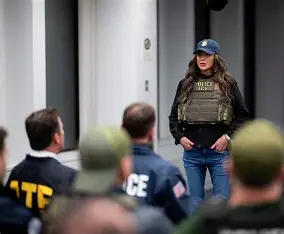
The Department of Homeland Security claims Good attempted to “run over” an ICE agent on a residential street in south Minneapolis. Homeland Security Secretary Kristi Noem went further, characterizing the incident as “an act of domestic terrorism.”
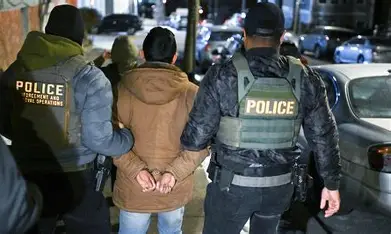
However, eyewitness accounts and circulating video footage paint a starkly different picture of the fatal encounter. The evidence suggests Good was attempting to drive away from ICE officers who were trying to remove her from her vehicle when the shooting occurred.
Witness Account Contradicts Federal Narrative
A witness who spoke to Minneapolis Public Radio described seeing a car blocking traffic on Portland Avenue, apparently as part of a protest against federal law enforcement operations. The witness reported hearing ICE agents ordering the driver to leave the area.
“She was trying to turn around, and the ICE agent was in front of her car, and he pulled out a gun and put it right in — like, his midriff was on her bumper — and he reached across the hood of the car and shot her in the face like three, four times,” the witness recounted.
Minnesota Governor Tim Walz dismissed the federal account outright after reviewing available footage. “I’ve seen the video. Don’t believe this propaganda machine,” Walz wrote on X, formerly Twitter.
State Attorney General Keith Ellison struck a more cautious tone while promising accountability. “There’s a lot we don’t know at this time,” he stated, adding that anyone who broke the law during the incident would be “held accountable.”
Local Officials Demand ICE Withdrawal
Minneapolis Mayor Jacob Frey didn’t mince words in his condemnation of the shooting, calling it “an agent recklessly using power that resulted in somebody dying, getting killed.” He dismissed the federal government’s characterization as “bulls***” during a press conference hours after the incident.
“We’re demanding ICE to leave the city immediately,” Frey declared on social media. “We stand rock solid with our immigrant and refugee communities.”
The mayor expressed the city’s long-standing concerns about federal immigration operations. “We’ve dreaded this moment since the early stages of this ICE presence in Minneapolis. And we collectively are going to do everything possible to get to the bottom of this to get justice, and to make sure that there is an investigation that is conducted in full.”
Massive Federal Operation Escalates Tensions
The shooting occurred just one day after the Department of Homeland Security announced what it called “the largest DHS operation ever” in Minnesota. According to sources briefed on the operation, DHS planned to deploy as many as 2,000 officers to the Minneapolis-St. Paul metropolitan area.
This dramatic escalation follows the Trump administration’s directive last month to send roughly 100 federal officials to Minneapolis-St. Paul specifically to target Somalis with final deportation orders. The move came after President Trump’s inflammatory remarks about Somali immigrants, whom he called “garbage.”
“When they come from hell and complain and do nothing but bitch, we don’t want them in our country,” Trump said in his controversial statement.
Minnesota is home to the world’s largest Somali diaspora, with approximately 73% of Somali immigrants nationwide holding U.S. citizenship, according to Census Bureau data. Many others have maintained temporary legal status for decades under programs designed for migrants from crisis-affected countries.
Pattern of Disputed Federal Shootings
Wednesday’s incident echoes a similar controversy from October, when a U.S. Customs and Border Protection agent shot Chicago resident Marimar Martinez multiple times during an immigration enforcement operation. DHS initially claimed Martinez “rammed” an agent’s car and brandished a weapon, but federal prosecutors later dropped charges after court proceedings revealed contradictions in the official narrative.
Department of Homeland Security spokesperson Tricia McLaughlin maintained the federal position on social media, characterizing Wednesday’s protesters as “violent rioters” and repeating claims that Good attempted to kill ICE officers.
“ICE officers in Minneapolis were conducting targeted operations when rioters began blocking ICE officers and one of these violent rioters weaponized her vehicle, attempting to run over our law enforcement officers in an attempt to kill them—an act of domestic terrorism,” McLaughlin alleged.
Community Response and Official Caution
As news of the shooting spread, hundreds of Minneapolis residents gathered for a peaceful vigil at the site where Good was killed. Governor Walz urged restraint among those seeking to protest, warning against providing pretexts for further federal escalation.
“To Minnesotans, don’t take the bait,” Walz cautioned. “Do not allow them to deploy federal troops here. Do not allow them to invoke the Insurrection Act. Do not allow them to declare martial law.”
Bob Jacobson, head of the Minnesota Department of Public Safety, described the investigation as being “in its infancy” and warned against drawing conclusions based on “speculation” about the events.
Minneapolis Police Chief Brian O’Hara confirmed that Good suffered a fatal head wound and was pronounced dead at a hospital. The stark divide between federal and local accounts of the shooting has set the stage for what promises to be a contentious investigation with significant implications for immigration enforcement nationwide.
Governor Walz, who recently ended his re-election bid, has been consistently critical of the federal immigration operations in his state. “We have a ridiculous surge of apparently 2,000 people not coordinating with us that are for a show of the cameras,” he said recently. “Why 2,000 folks? What are they coming to do? Do they want to coordinate with us?”
As investigations continue, the shooting has intensified the already charged atmosphere surrounding immigration enforcement, with local officials demanding transparency and federal authorities defending their operations as necessary for public safety.