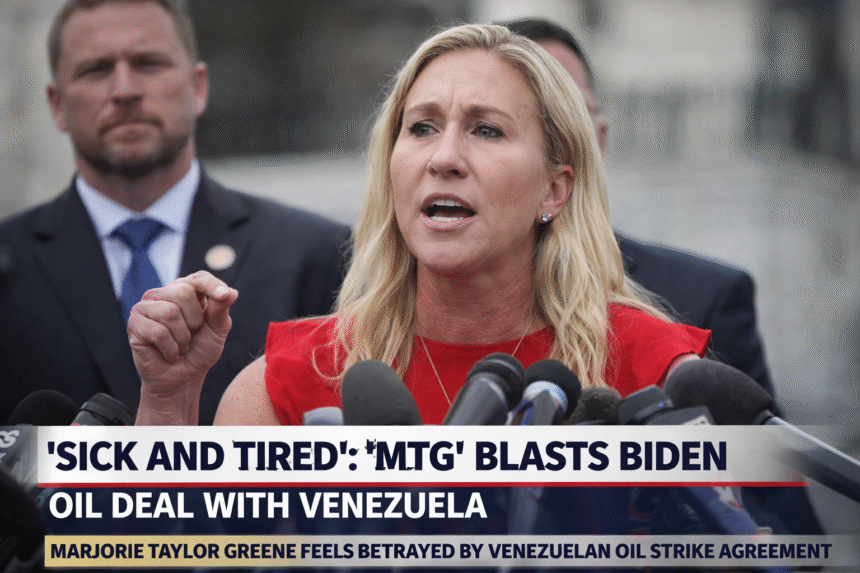
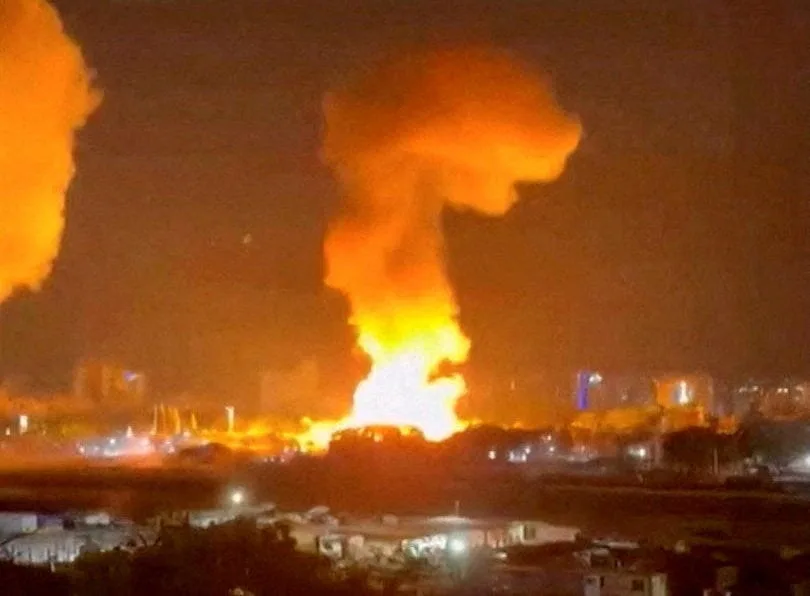
In a scathing rebuke that has deepened fractures within the Republican Party, Representative Marjorie Taylor Greene of Georgia has unleashed sharp criticism against President Donald Trump’s military operation in Venezuela, condemning it as a fundamental betrayal of his “America First” campaign pledge.

The Georgia firebrand, who has had a tumultuous relationship with Trump over the past year, didn’t mince words when addressing the president’s decision to launch strikes against Venezuelan targets and capture President Nicolás Maduro. Greene’s criticism strikes at the heart of Trump’s core campaign promise to end American involvement in foreign military adventures.
Speaking on NBC’s “Meet the Press,” Greene expressed her frustration with what she sees as a return to traditional Washington politics. “This is the same Washington playbook that we are so sick and tired of that doesn’t serve the American people, that actually serves the big corporations, the banks, and the oil executives,” she declared. “My understanding of America first is strictly for the American people.”
While Greene acknowledged she was “happy” for the Venezuelan people and had no support for Maduro’s authoritarian leadership, she questioned the administration’s justification for the military action. The congresswoman expressed skepticism about Trump’s claims that the operation was primarily aimed at combating narco-terrorism and drug trafficking.
Her pointed criticism extended to what she sees as misplaced priorities in America’s drug war. If the president truly cared about stopping drug trafficking, Greene argued, his focus should be on Mexican cartels rather than launching military operations in South America.
The timing of Greene’s criticism is particularly significant, as she prepares to leave Congress on January 5th following a bitter feud with Trump. Her departure marks the end of what was once a close political alliance that soured over disagreements about Jeffrey Epstein document releases and previous Venezuelan boat strikes.
Oil Interests Take Center Stage
Trump’s defense of the Venezuelan operation has centered heavily on energy considerations, a justification that has only intensified criticism from Greene and other skeptical Republicans. During a press conference, the president made clear that oil reserves played a crucial role in his decision-making process.
“We want to surround ourselves with good neighbors. We want to surround ourselves with stability. We want to surround ourselves with energy,” Trump told reporters. “We have tremendous energy in that country. It’s very important that we protect it. We need that for ourselves, we need that for the world.”
Venezuela possesses the world’s largest proven oil reserves, a prize that has remained largely inaccessible to American energy companies since the mid-1970s when the country nationalized its petroleum sector. Currently, only Chevron maintains operations in Venezuela among major American oil corporations.
Trump has suggested that Maduro’s removal will open these vast energy reserves to major U.S. oil and gas companies. The president outlined an ambitious reconstruction plan that would cost billions of dollars. “We’re going to rebuild the oil infrastructure, which will cost billions of dollars,” Trump explained. The cost, he assured, will be “paid for by the oil companies directly,” though they will be “reimbursed.”
This economic justification has drawn fierce criticism from Greene, who sees it as evidence that corporate interests are driving foreign policy decisions rather than genuine national security concerns.
Congressional Divide Widens
Greene’s opposition reflects a growing schism within Congress over presidential war powers and the extent of America’s global military commitments. Her criticism has found support from unexpected quarters, including fellow Republican Representative Thomas Massie of Kentucky.
Massie, who has also clashed with Trump in the past, questioned the administration’s stated motives by highlighting apparent inconsistencies in the Justice Department’s indictment of Maduro. “25 page indictment but no mention of fentanyl or stolen oil,” Massie noted in a social media post, referring to the administration’s primary justifications for the operation.
However, the criticism hasn’t been universal among Republicans. House Speaker Mike Johnson of Louisiana has strongly defended Trump’s actions, framing them as protective of American interests. “President Trump is putting American lives first, succeeding where others have failed, and under his leadership the United States will no longer allow criminal regimes to profit from wreaking havoc and destruction on our country,” Johnson stated.
Greene’s response to Trump’s neighborhood stability argument was characteristically blunt: “We don’t consider Venezuela our neighborhood. Our neighborhood is right here in the 50 United States, not in the Southern Hemisphere,” she said during her “Meet the Press” appearance.
The Epstein Files Controversy
The current dispute over Venezuela represents the latest chapter in an increasingly bitter relationship between Greene and Trump. The congresswoman has traced the beginning of their feud to her persistent demands for the release of federal files related to convicted sex offender Jeffrey Epstein.
Greene alleges that Trump began attacking her publicly after she pushed for greater transparency regarding the Epstein case. The Justice Department eventually began releasing thousands of pages of related documents in late December, but not before the relationship between the two had deteriorated significantly.
The personal nature of their conflict became apparent when Trump publicly called Greene “wacky” and a “traitor” – labels that clearly stung the Georgia representative. “Demanding transparency for that should not lead to the president, who I helped get elected and supported far more than pretty much any Republican in Washington, it should not have led to him calling me a traitor,” Greene said. “That is absolutely unacceptable.”
Broader Implications for Trump’s Foreign Policy
The Venezuelan operation and the subsequent criticism it has generated highlight fundamental tensions within Trump’s political coalition. Many of his supporters were drawn to his promises to end America’s role as global policeman and focus resources on domestic priorities.
Greene’s criticism taps into these concerns, suggesting that the Venezuelan intervention represents a return to the interventionist policies that Trump once criticized. Her argument that the operation serves corporate interests rather than ordinary Americans echoes populist themes that were central to Trump’s original appeal.
The debate also raises important questions about congressional oversight of military operations. While presidents have historically claimed broad powers to conduct military operations without explicit congressional authorization, critics argue that the Venezuelan operation represents exactly the kind of foreign entanglement that requires legislative approval.
As Greene prepares to leave Congress, her final criticisms of Trump’s Venezuela policy serve as a reminder of the ideological tensions that continue to simmer within the Republican Party. Her departure removes one of the most vocal critics of foreign intervention from Congress, but the questions she has raised about America’s global role are likely to persist.
The Venezuelan operation has already demonstrated that Trump’s return to the presidency has not eliminated debates over America’s proper role in the world. Instead, it has simply reconfigured them, with traditional foreign policy hawks finding themselves in the unusual position of defending military intervention while some of Trump’s most ardent supporters question whether such actions truly serve American interests.