In a stunning turn of events that has sent shockwaves across Latin America, Venezuelan President Nicolás Maduro has been captured by United States forces following what officials describe as a “large-scale strike” on Venezuelan territory early Saturday morning.

The dramatic operation marks the culmination of years of escalating tensions between Washington and Caracas, with Maduro and his wife Cilia Flores now facing criminal charges in New York courts. The unprecedented military action has left Venezuela without its controversial leader and raised urgent questions about the future of the oil-rich nation.
The Rise and Fall of Nicolás Maduro
Nicolás Maduro’s journey to power began in tragedy. When Venezuela’s charismatic leader Hugo Chávez succumbed to cancer in 2013, Maduro stepped into shoes many believed were too large to fill. His victory in the subsequent special presidential election was razor-thin, a harbinger of the turbulent years that would follow.
The honeymoon period, if it ever existed, was brief. By 2014, Venezuela was convulsing with protests as citizens faced severe food shortages and a rapidly deteriorating standard of living. The demonstrations turned deadly when three protesters lost their lives, drawing international condemnation and marking the beginning of Maduro’s reputation as an authoritarian leader willing to use force against his own people.
Despite plummeting popularity and widespread opposition, Maduro consolidated power through a compliant legislature dominated by his ruling party. His ability to maintain control while presiding over Venezuela’s economic collapse became a defining characteristic of his rule.
A Presidency Marked by Crisis and Controversy
When Maduro was sworn in for a second term in 2019, the international community largely turned its back on Venezuela. Seventeen Latin American governments, along with the United States and Canada, refused to recognize the legitimacy of his presidency. The reason was clear: Venezuela was experiencing a devastating economic crisis under his watch, with hyperinflation, mass emigration, and collapsing public services.
The 2024 presidential election promised to be different. Maduro had pledged free and fair elections, raising hopes for democratic renewal. Instead, the process was marred by allegations of widespread electoral fraud. When Maduro declared victory, protests erupted across the country once again, and the United States expressed “serious concerns” about the legitimacy of the results.
The Trump-Maduro Confrontation: A Collision Course
The relationship between the United States and Venezuela under Maduro has been one of steady deterioration, but it was during Donald Trump’s previous presidency that tensions reached a breaking point. The trajectory of conflict has been relentless and increasingly severe.
In 2017, the US Treasury Department took the unprecedented step of sanctioning Maduro personally, freezing his assets and prohibiting American citizens from conducting business with him. This move came in direct response to controversial elections for a new legislative body that many viewed as a power grab.
The stakes escalated dramatically in 2018 when reports surfaced of US officials allegedly collaborating with Venezuelan military officers to plan a coup against Maduro. Whether true or not, these reports deepened mutual suspicion and led to additional sanctions against Maduro’s wife and inner circle.
The most significant diplomatic rupture came in 2019 when the United States recognized Juan Guaidó, the opposition leader of the National Assembly, as Venezuela’s legitimate president. This bold move prompted Maduro to sever all official ties with Washington and give US diplomats just 72 hours to leave the country. Maduro accused the United States of backing what he called an attempted coup.
Criminal Charges and the Path to Military Action
In 2020, the US Justice Department elevated the confrontation to a new level by announcing narco-terrorism and other criminal charges against Maduro and senior government officials. The charges alleged that Venezuela’s leadership was deeply involved with terrorist organizations and drug trafficking networks, accusations that would later provide legal justification for Saturday’s dramatic capture.
The prelude to Saturday’s operation began in early September when US military forces started attacking boats in the Caribbean Sea and eastern Pacific Ocean. Trump characterized these strikes as necessary to stem the flow of drugs into the United States, declaring that America was engaged in an “armed conflict” with drug cartels.
In a final attempt at diplomacy that proved too little, too late, Venezuela indicated on Friday its willingness to negotiate an anti-drug trafficking agreement with the United States. In a pre-taped interview that aired Thursday, Maduro claimed the US pressure campaign was designed to force regime change and secure access to Venezuela’s vast oil reserves.
Justice and Uncertainty: What Comes Next
US Attorney General Pam Bondi has confirmed that both Maduro and his wife will face criminal charges following their indictment in New York. In stark language that reflects the gravity of the situation, Bondi declared that Maduro will “soon face the full wrath of American justice on American soil in American courts.”
With Maduro in US custody, Venezuelan Vice President Delcy Rodríguez has assumed the role of the country’s de facto leader, though the legitimacy and stability of this arrangement remain highly questionable.
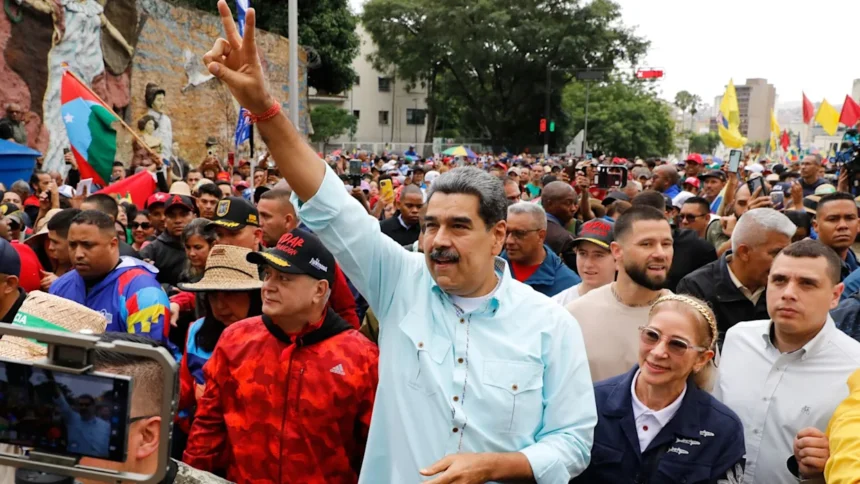
The Venezuelan government’s response has been predictably defiant. In an emergency statement, officials called for mass mobilization, declaring: “People to the streets! The Bolivarian Government calls on all social and political forces in the country to activate mobilization plans and repudiate this imperialist attack.”
Early reports indicate that some Venezuelans have indeed taken to the streets in major cities, with supporters carrying photographs of the captured president. However, the scale and sustainability of these protests remain unclear as the country grapples with the sudden absence of its long-time leader.
The capture of Nicolás Maduro represents a seismic shift in Latin American geopolitics and raises fundamental questions about sovereignty, international law, and the limits of US power projection. As Venezuela faces an uncertain future and the region watches nervously, the ramifications of this extraordinary military and diplomatic gambit are only beginning to unfold.