A severe water contamination crisis has gripped KSFC Layout in Lingarajapuram, forcing dozens of families to abandon their taps and rely on private water sources as sewage infiltration turns their drinking water into a health hazard. The situation has left residents battling illness and mounting expenses while authorities scramble to locate the source of contamination.

Over 30-40 households in the North City Corporation area have been grappling with sewage-contaminated drinking water for more than a week, with many residents falling sick and some requiring hospitalization for suspected waterborne infections. The crisis has evoked fears of an Indore-like public health emergency among the affected community.
The contamination went undetected for weeks as residents initially dismissed early symptoms as food poisoning or seasonal ailments. The true extent of the problem became apparent only recently when families discovered foul-smelling, frothy water flowing from their taps and thick layers of dark sewage silt accumulating in their underground storage sumps.
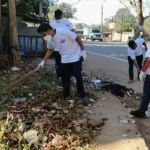
“When we opened the sump, it wasn’t just dirty water-it was stinking sewage sludge,” said Paul Newman, a resident of 3rd ‘B’ Main. The alarming discovery prompted immediate action from several families who had been experiencing unexplained health issues.
“My daughters fell ill, and we thought it was due to some other reason. Later, neighbours too complained of gastrointestinal pain, vomiting and diarrhoea. That’s when we approached BWSSB,” Newman explained, describing how the pattern of illness across multiple households revealed the water contamination crisis.
Shamala, another affected resident, detailed how the water quality deteriorated progressively over time. “Initially, dirty water would flow for a few minutes after we opened the tap, followed by clear water. Now, the water is extremely foul-smelling and discoloured. It is completely unusable, we didn’t want to take the risk. After suffering stomachache and diarrhoea, I began buying water from outside,” she said.
The Bangalore Water Supply and Sewerage Board (BWSSB) responded to multiple complaints by conducting inspections in the Lingarajapuram area on Friday and Saturday. Officials confirmed that sewage had infiltrated the potable water pipeline at an undetermined location, but residents claim authorities have yet to pinpoint the exact breach point.
According to residents, BWSSB teams are conducting what appears to be a trial-and-error excavation process, digging at multiple locations across the area in an attempt to trace the fault. This approach has raised concerns about the time required to resolve the crisis while families continue to suffer health consequences.
The contamination has definitely impacted more than 30 houses along a single lane, though residents suspect the problem may extend to a broader area. Medical professionals treating affected individuals have confirmed that the illnesses are consistent with water contamination, adding medical credibility to residents’ concerns.
Anicita Rosario shared her family’s harrowing experience with the contaminated water supply. “The doctor confirmed it was a bacterial infection caused by water. My daughter was hospitalised, and then all three of us fell sick. We noticed a strange smell while bathing and washing dishes, and later saw discoloured water in the sump. That’s when we shut the main valve and cut off the water supply,” she recounted.
The crisis has imposed a significant financial burden on affected families, who now face multiple expenses beyond medical bills. Residents have been forced to invest in deep sump cleaning, an expensive process, while simultaneously purchasing water from private tankers and bulk RO water suppliers for daily consumption.
“People are not just dealing with hospital bills but are also forced to spend on deep sump cleaning, which is expensive. We are using packaged RO water from bulk suppliers for drinking and cooking. We don’t know when safe water supply will be restored. Even if the govt deploys tankers till the leak is plugged, our pipelines and taps remain contaminated, and we cannot risk using them,” Paul explained, highlighting the comprehensive impact of the contamination.
As the situation continues without a clear resolution timeline, residents of KSFC Layout remain dependent on alternative water sources while hoping for swift action from BWSSB to identify and repair the sewage breach. The incident underscores the critical importance of maintaining water infrastructure integrity and the devastating consequences when systems fail in densely populated urban areas.
The community’s reference to potential “Indore-like” consequences reflects genuine concern about the crisis escalating into a larger public health emergency if not addressed promptly and effectively by municipal authorities.